Letrify
Live meeting translation, built for bilingual organisations.
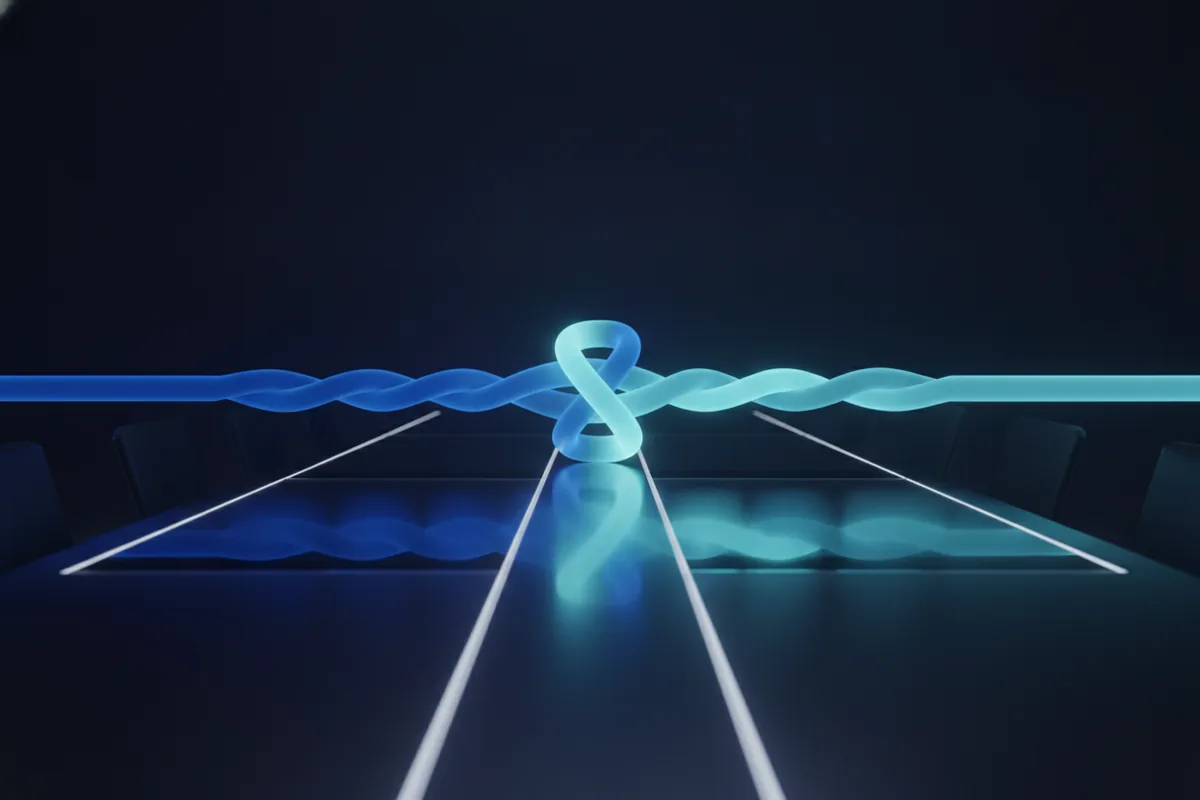
Two languages, one record — and it is usually the weaker of the two.
In a bilingual organisation, the meeting is the point where language stops being a convenience and becomes a governance question. Decisions get taken in one language and recorded in another. Participants who follow at eighty per cent do not say so. The record that survives is the one that matters later, and it is usually the weaker of the two.
A bilingual meeting produces two records whether anyone intends it or not: what was said, and what was written down. They diverge quietly. The minute is drafted in one language, the decision was argued in the other, and the difference surfaces months later, when someone reads the file and acts on it.
Comprehension is the part nobody reports. A participant following at eighty per cent will not interrupt a board meeting to say so, and the missing fifth is rarely the routine material — it is the conditional clause, the reservation, the figure that was corrected once. So the requirement is not a transcript. It is a record that holds who said what, in which language, and where a person confirmed it.
How this case is written.
Every case answers the same six blocks, in the same order — the template is set out on the case-studies page. The sixth, what we would do differently, is the one a competitor will not copy.
The full case file — constraint, build, outcomes, and what we would change — is walked through in person.
The rest of this case is a conversation.
Ask what constrained it, where a person still decides, and what we would do differently if we started again. A demonstration answers none of those.